Historical Context
Understanding the railways that once connected the Eastern Mediterranean — and the vision that nearly linked London to Cairo.
Levantrain draws inspiration from a long but interrupted history of transport across the eastern Mediterranean. In the late 19th and early 20th centuries, ambitious lines and proposals nearly stitched together a route from Europe toward Cairo; fragments of those plans, historic stations, and old maps remain a vivid record of what was imagined.
The story of regional rail in the Levant is one of grand vision, geopolitical complexity, and incomplete connections. Understanding this history helps us appreciate both the potential and the challenges of creating modern rail infrastructure across borders.
Historic route maps
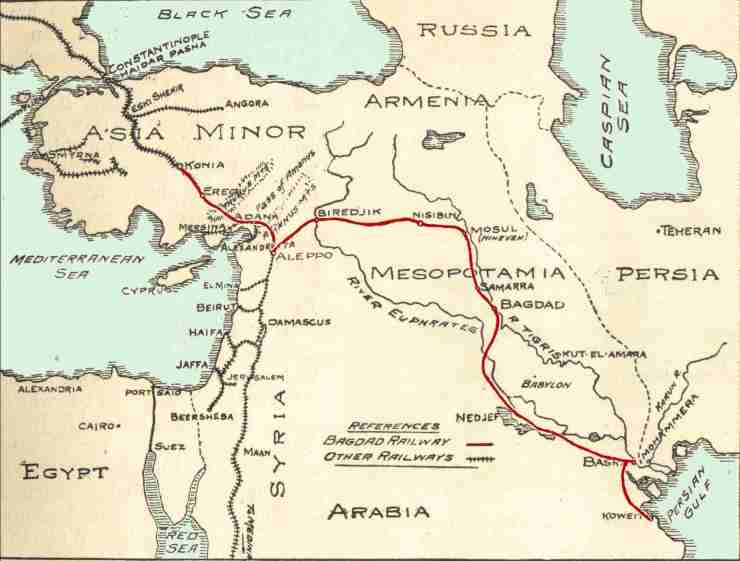
Baghdad Railway (1917)
Figure 1 — The Baghdad Railway project in 1917. – Source: trainconsultant.com
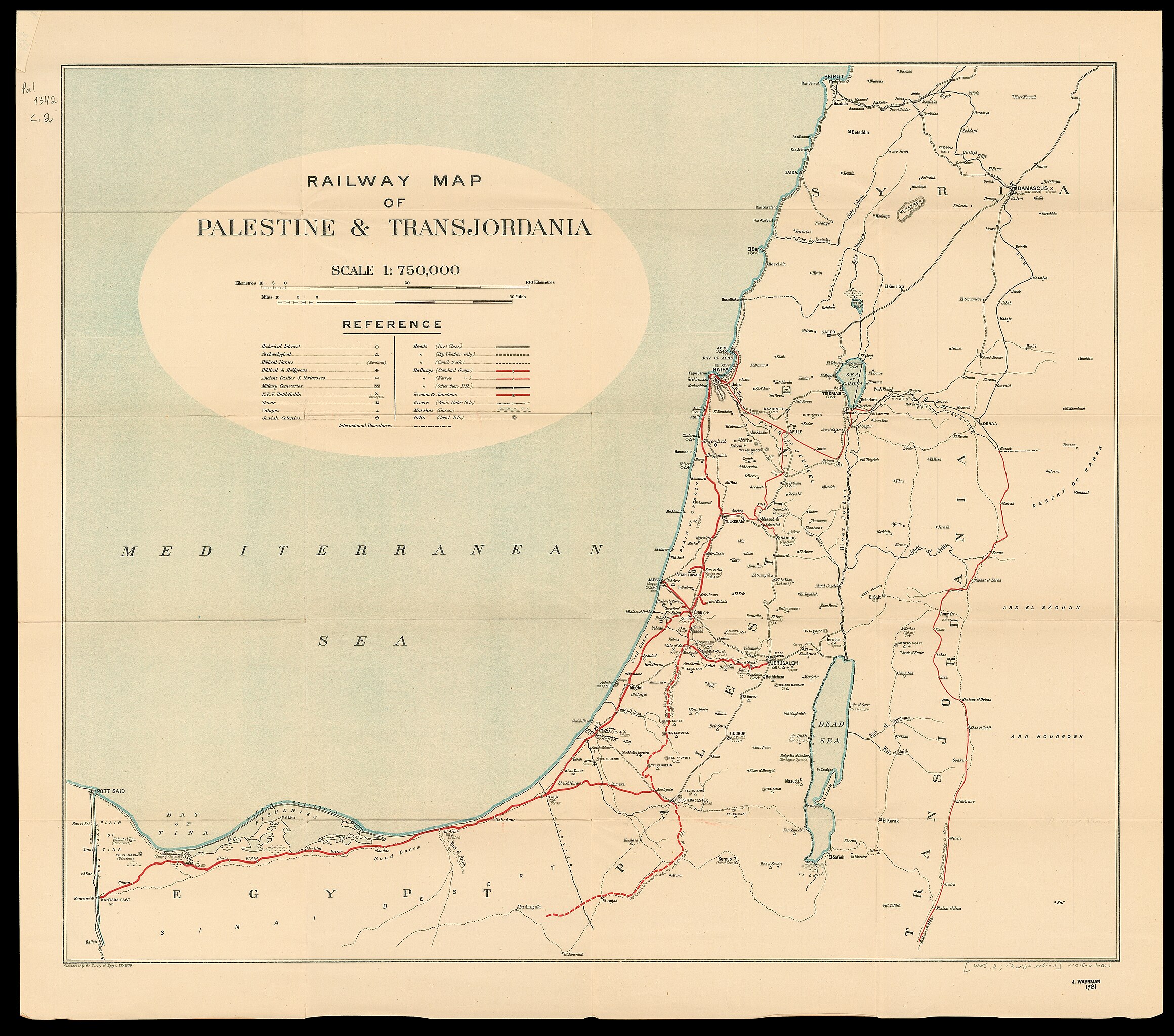
Railway map of Palestine & Transjordan (1922)
Figure 2 — Railway map of Palestine & Transjordan by Survey of Egypt from 1922. From: Luke, Harry, Sir. The handbook of Palestine. London, 1922, in pocket. 34 V 766 .; Luke, Harry, 1884-1969; Shows Anglo - French frontier. – Source: wikipedia.org

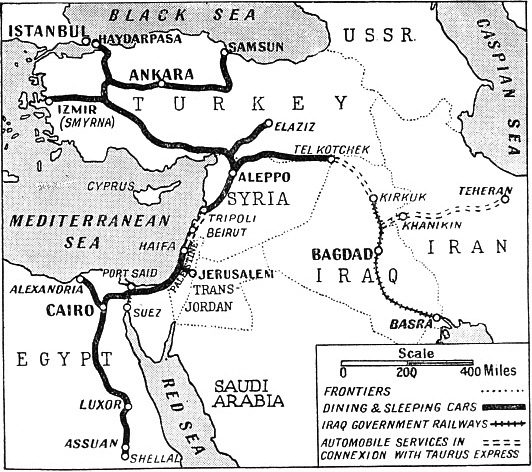
The route of the “Taurus Express” (ca. 1920–1926)
Figure 3 — According to ChatGPT, this map is likely from between 1920 and 1926, based on the fact that “Syria, Palestine, and Trans-Jordan existed but Lebanon was not yet officially a separate entity”. – Source: railwaywondersoftheworld.com (no information regarding the original source available)
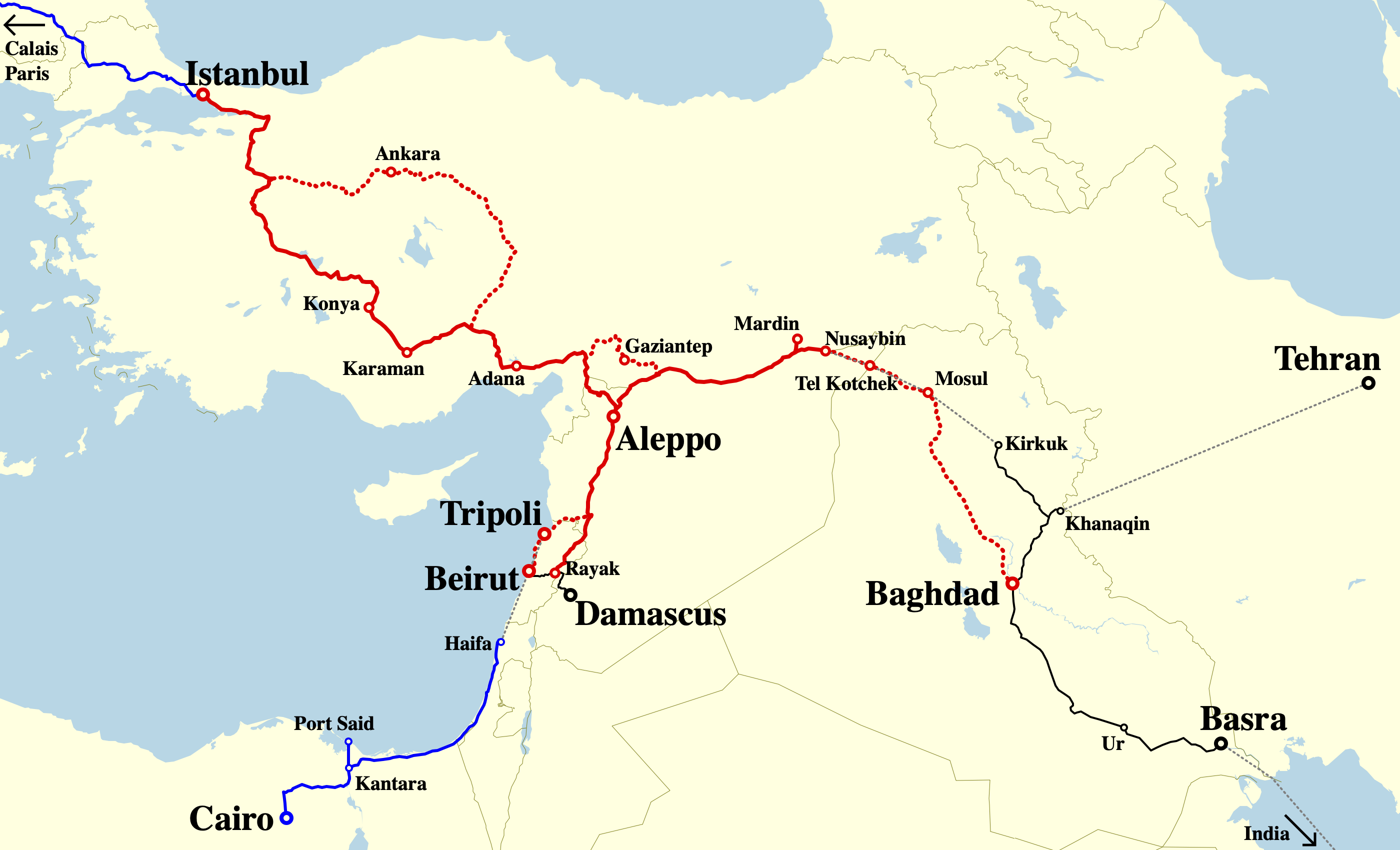
The historical route of the Taurus Express in 1930
Figure 4 — The historical route of the Taurus Express in 1930 by Matsukaze is licensed under CC BY-SA 3.0 – Source: wikipedia.org

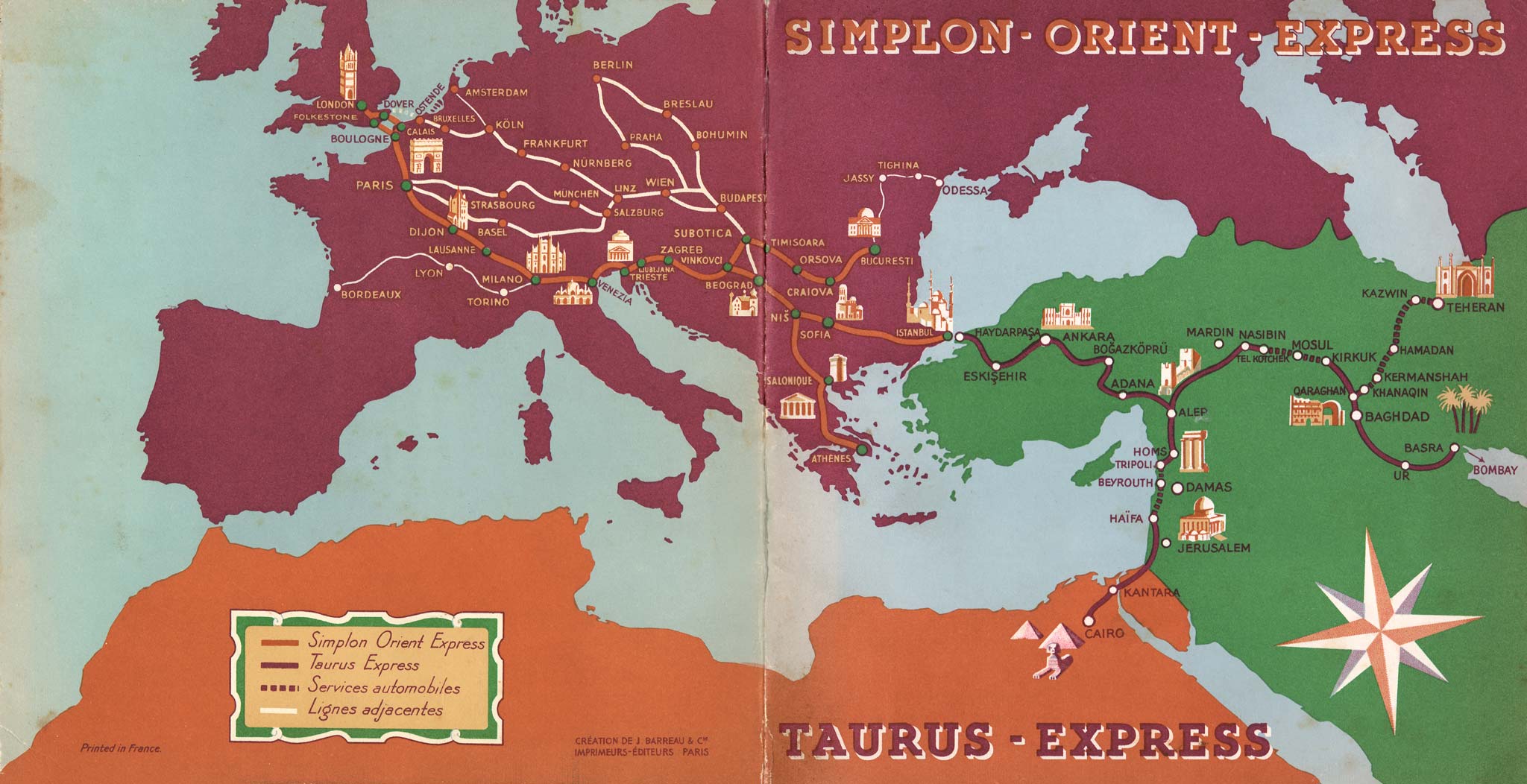
Simplon Orient-Taurus Express (1930)
Figure 5 — According to the source alt text: “Simplon Orient-Taurus Express brochure, 1930 | J. Barreau & Cie (coll. Arjan den Boer)“) – Source: retours.eu
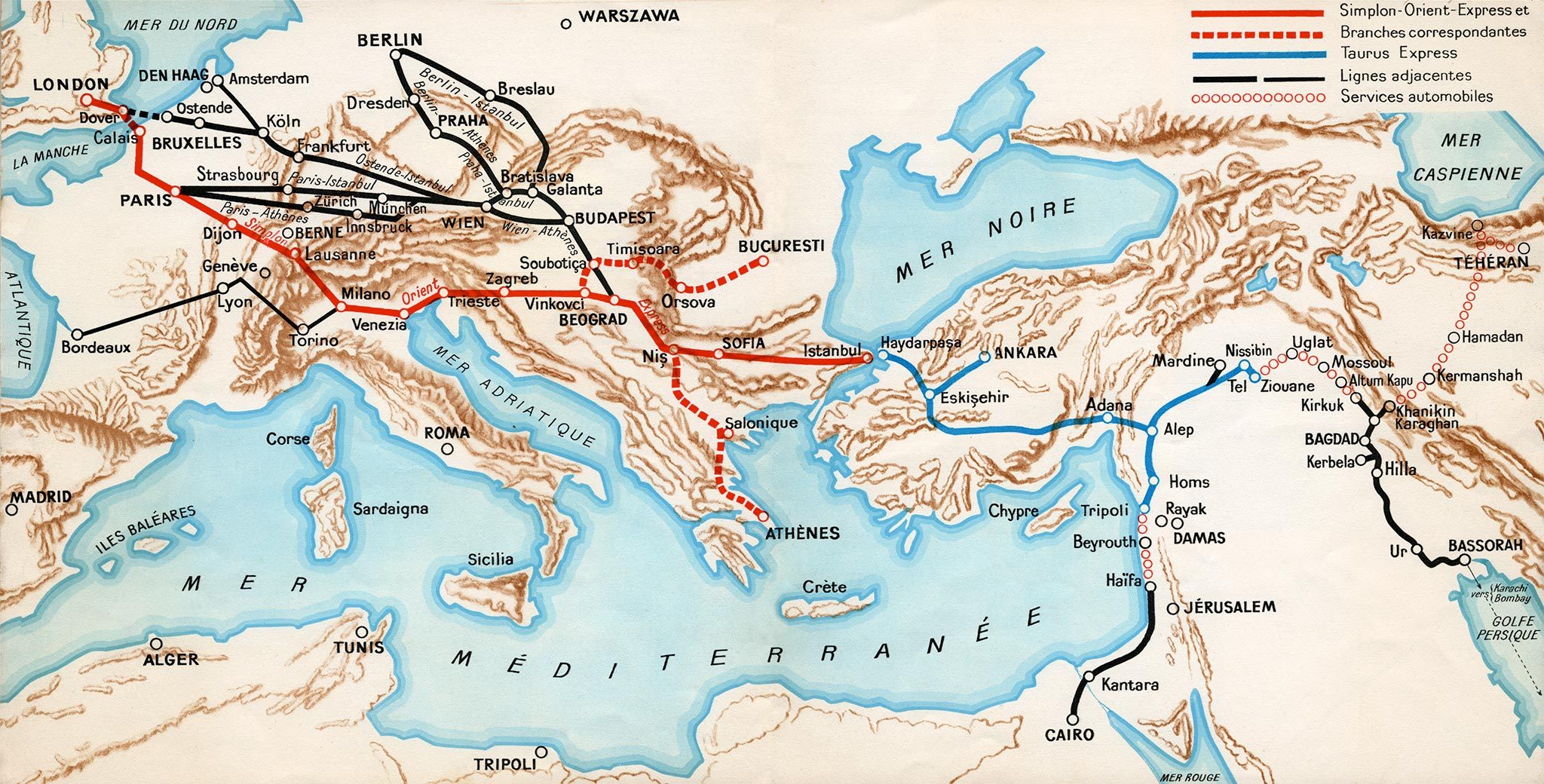
Simplon Orient Express (1932)
Figure 6 — Simplon Orient Express map, c. 1932. (Photo: Arjan den Boer) – Source: atlasobscura.com
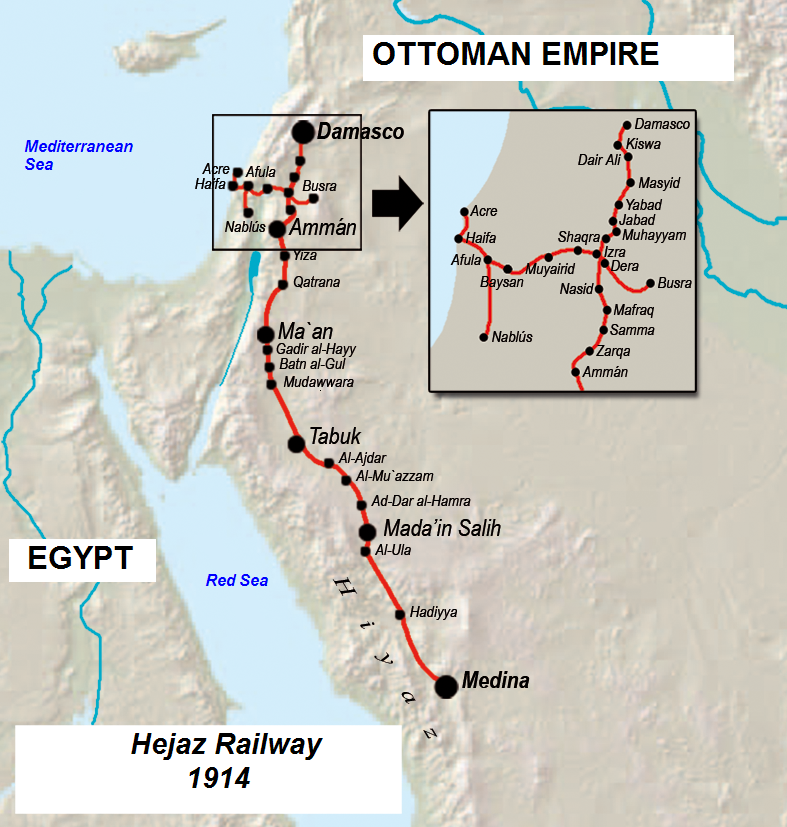
Hejaz Railway (1914)
Figure 7 — Hejaz Railway map, 1914 – Source: Wikipedia
Key historical moments
The first railways
Egypt opens the region’s first railway, Alexandria to Cairo, in 1856 — the earliest in the Ottoman world and in Africa. A Cairo–Suez line follows in 1858, linking the Mediterranean to the Red Sea a decade before the Suez Canal.
Ottoman Railway Development
The Ottoman Empire pushes its railways eastward from Anatolia toward Syria, laying the groundwork for the two great projects of the following decades — the Hejaz Railway and the Berlin–Baghdad line.
Rails reach the Levant
The railway arrives in the Levant proper: the Jaffa–Jerusalem line opens in 1892, the first in Palestine, and in 1895 the Beirut–Damascus line climbs Mount Lebanon on a toothed rack section to cross the mountains.
The Hejaz Railway
Ordered in 1900 by Sultan Abdul Hamid II, the Hejaz Railway reached from Damascus to Medina by 1908 — some 800 miles — with a branch to Haifa completed by 1914. Conceived partly as a religious undertaking, roughly a third of its cost came from voluntary donations across the Muslim world, and it cut the pilgrimage from a 40-day camel caravan to under a week. Its heyday was brief: through the First World War and the Great Arab Revolt it was repeatedly attacked — raiders alongside T. E. Lawrence among them — and by 1917 long stretches already lay in ruins. — Noema (2025)
Berlin-Baghdad Railway
German-funded railway project aims to connect European networks through Constantinople to Baghdad, with potential extensions toward the Persian Gulf and Cairo.
Near-completion
By the eve of World War I, railway networks across the region were closer than ever to creating continuous connections, with only a few missing links preventing through-travel from Europe to Egypt.
Political fragmentation
Post-war border changes, mandate systems, and emerging nation-states interrupt the integrated railway vision, leaving fragments of the original network across new political boundaries.
A golden age of through-travel
Even as new borders hardened, luxury services briefly knit the region together. From 1930 the Taurus Express, connecting with the Simplon–Orient Express, carried travellers from Europe toward Aleppo, Baghdad, Tripoli, Haifa and Cairo — the closest the Middle East came to seamless long-distance rail.
The coast, briefly whole
During the Second World War, military need completed the Mediterranean coastal route: the Haifa–Beirut–Tripoli line opened in 1942 — on paper the last missing link between the European and North-African standard-gauge networks. Yet it never opened to regular civilian service: the British ran it as a military line, and by 1948 the bridges below the Ras al-Naqoura tunnels were destroyed, severing the coast almost as soon as it was joined. The connection was made and lost in the same breath — the region’s great “missed connection.” — SyriaUntold (2021)
Borders sever the network
The 1948 war and the closures that followed cut the cross-border lines. The Jezreel Valley branch of the Hejaz system fell silent, and route after route was severed where new frontiers met — the connected network unravelling into national fragments.
A slow revival
Interest returns. Israel reopens the Jezreel Valley line in 2016, Gulf states build high-speed and freight networks (the Haramain line, Etihad Rail, the planned GCC railway), and the idea of a connected regional railway — the premise behind Levantrain — is imagined once more.
The current situation
What remains today: the region’s existing railway infrastructure, a patchwork of the once-connected network.
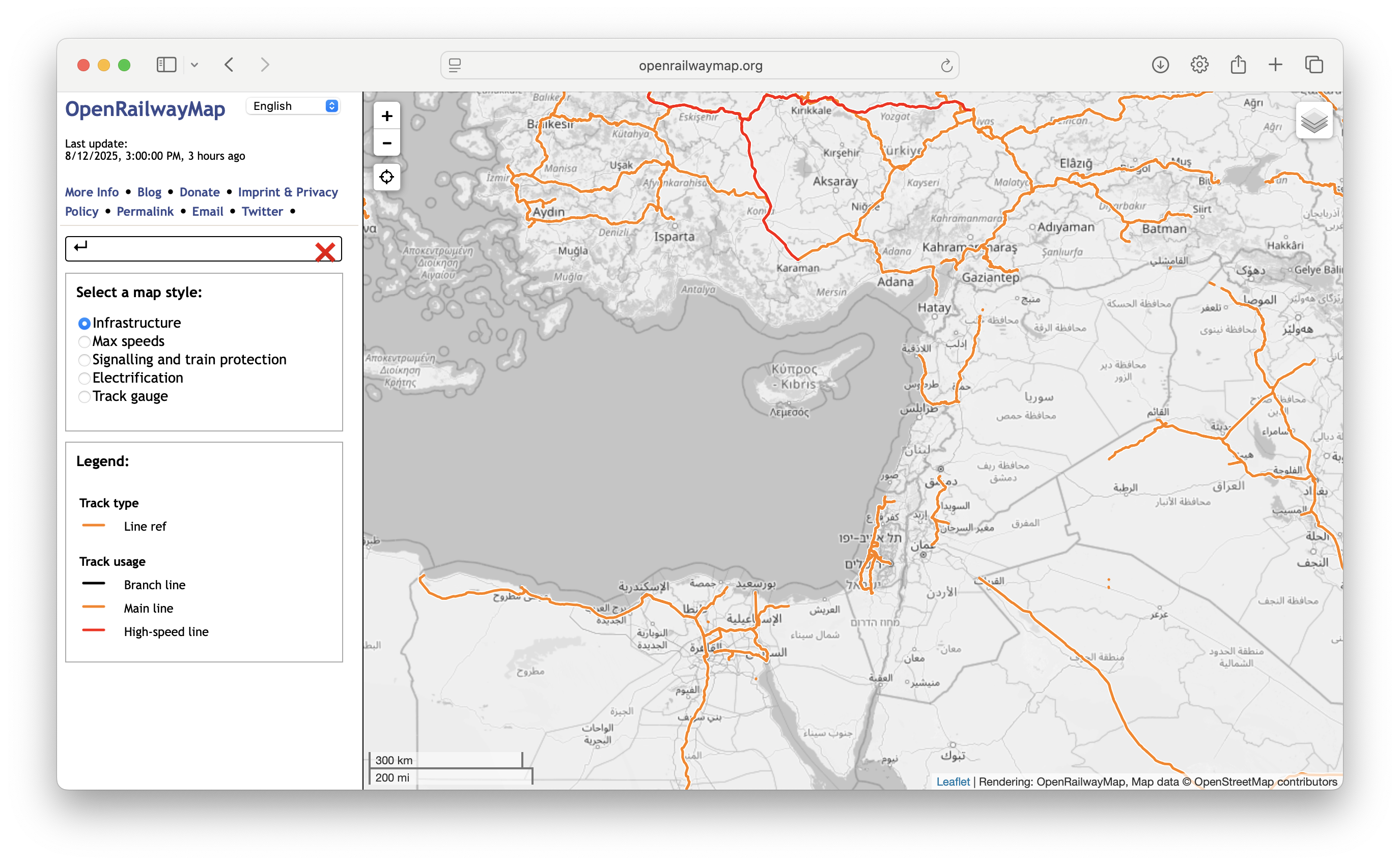
Current railway infrastructure in the Middle East and Levant region
Source: openrailwaymap.org